

Directing on Stage, Holding Space in Therapy: The Two Chairs I Sit In
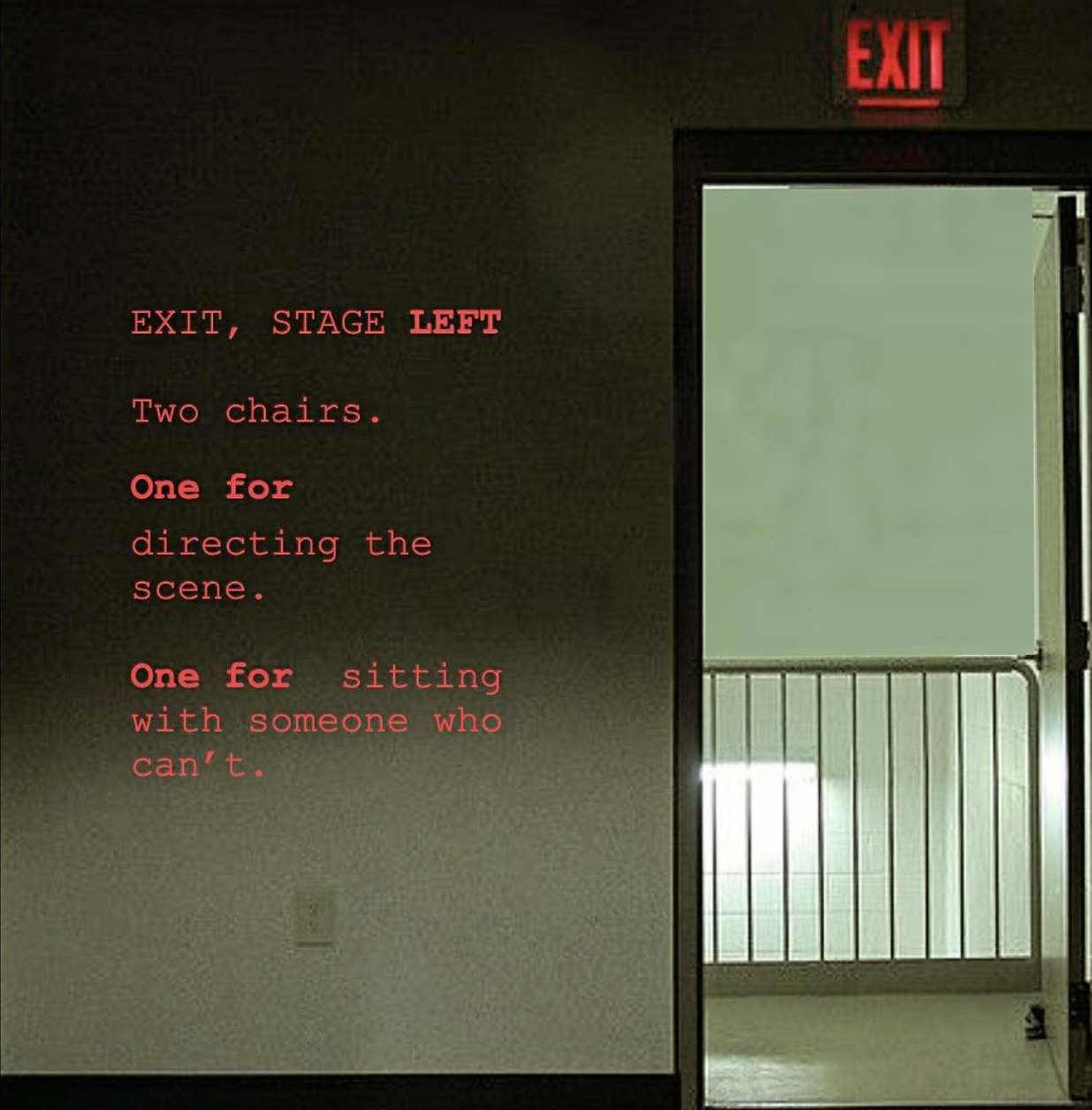
EXIT, STAGE LEFT
Two chairs.
One for directing the scene.
One for sitting with someone who can’t.
Last week felt like a relay. Daytime in the rehearsal room. Evenings in the therapy room. No real line between the two.
One night, I sat with a woman who had just lost her husband. Her guilt was louder than her grief.
That morning, in rehearsal, an actor’s perfectly timed laugh lit up the scene.
Same emotion, different room.
In one space, laughter hides pain.
In the other, it delivers the punchline.
Lately, I’ve been switching chairs a lot—
from directing a musical comedy
to sitting beside someone who doesn’t know how to keep going.
In rehearsals, quick decisions are made constantly: where the beat should land, how much the underscore should swell, whether a moment needed stillness or spectacle. I decide on entrances, exits, timing, pacing—even the subtext behind a glance.
But in the therapy room, none of that belongs to me.
I don’t call the cues.
I don’t choose the exit.
I don’t control the tempo or decide what comes next.
I hold. I wait. I listen.
I sit with what doesn’t resolve.
In one room, connection is blocked.
In the other, blocking builds connection.
One looks to me to shape the emotion.
The other asks me to simply stay with whatever shows up, no matter how raw.
And somewhere between the sound cue and the silence,
the headpiece and the heartache,
I’m trying to stay honest in both.
Maybe we’re all just moving between rooms—
Somewhere we lead,
Somewhere we lose the script.
And in between,
we forget our roles long enough
to be seen—by no one, and completely.
If you found this post helpful, feel free to share it with someone who might benefit!
Warmly,
George Chan
This Is How We Heal

George Chan, MCOU, is a Counsellor, Grief Educator and Breathwork Coach who specialises in helping individuals navigate grief and loss through his private practice, This Is How We Heal. With a rich background in theatre and entertainment, George brings creativity and empathy to his work. When he's not in the therapy room, you might find him performing, choreographing, or working on a new production—or spending time with Luna, his Jack Russell Terrier, who doubles as his unofficial co-therapist and production critic.