

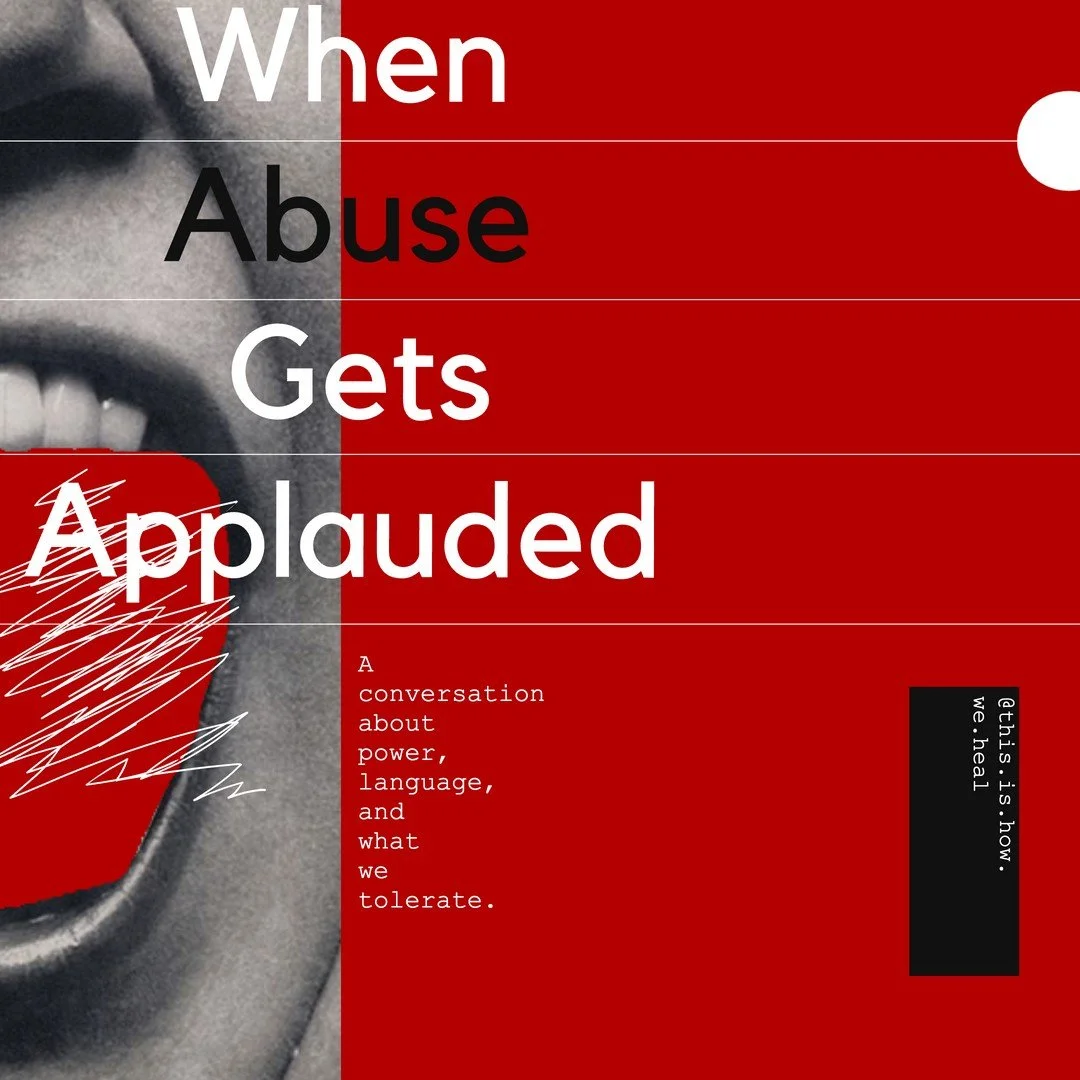
When Abuse Gets Applauded: A Conversation About Power, Language, and What We Allow
I met up with a friend who had just been terminated from her job. As she was telling me what happened, I found myself less affected by the decision itself, and more by how it was done.
She shared some of the things that were said to her during her performance appraisal. Not implied, not read between the lines, but said directly to her face — things like “I’m not interested in your views” and “you’re not good enough.”she was shouted at, multiple times, with HR in the room. At one point, when she started tearing, she was told to stop.
I’ve known her for over 30 years. I’ve seen her at her best and her worst, like most long friendships go. And I’ve always admired her capability and strengths.
So hearing her describe that moment… it just didn’t line up with the person I know.
I realised too that I’ve spent most of my life freelancing and being my own boss, which means I’ve never really had to sit across someone and be spoken to like that in a workplace. But over the years, I’ve heard enough horror stories from friends and clients to know this kind of thing happens more often than we think.
“Toxic work culture” - We call it.
But sometimes it’s just abusive behaviour, plain and simple.
It’s demeaning. It’s very personal. And then it gets reframed as “this is just how strong leaders talk,” or “this is part of our company’s high standards”.
Those around may feel uncomfortable witnessing this, but they stay quiet. And that silence allows it. Sustains it. And over time, it gets embraced as power.
As Gabor Maté once said, “Not all psychopaths are in prison. Some are in boardrooms.”
In Singapore, we pride ourselves on CSR, on empowerment, on supporting women in leadership. Campaigns, LinkedIn posts, well-staged events with all the right language.
And yet, in rooms like the one my friend was in, someone gets spoken to like they are nothing. Shut down, told to stop feeling, told they are not worthy.
Corporate Social Responsibility? Or just Corporate Image Management?
We often think illness is just biology. Something individual. Something inside one’s body.
But our biology doesn’t exist in isolation.
It’s affected by our emotional world.
And our emotional world is shaped by how we are treated, the environments we are in, the relationships we are part of.
So maybe what we call “illness” isn’t just individual…but also cultural.
I remember reading that close to 80% of autoimmune conditions affect women.
And I wonder,
in how many spaces are women still expected to absorb more, to not ‘over-react’, to hold things together?
What does that do to a person over time, to be spoken to like they are not enough, and still expected to carry on as if nothing happened?
At what point does the body start carrying what the environment keeps handing to it?
Before we parted, my friend said to me, “Maybe my superior needs to see a therapist.”
But we both know.
Narcissists don’t line up for therapy.
The people they hurt do.
If you found this post helpful, feel free to share it with someone who might benefit!
Warmly,
George Chan
This Is How We Heal
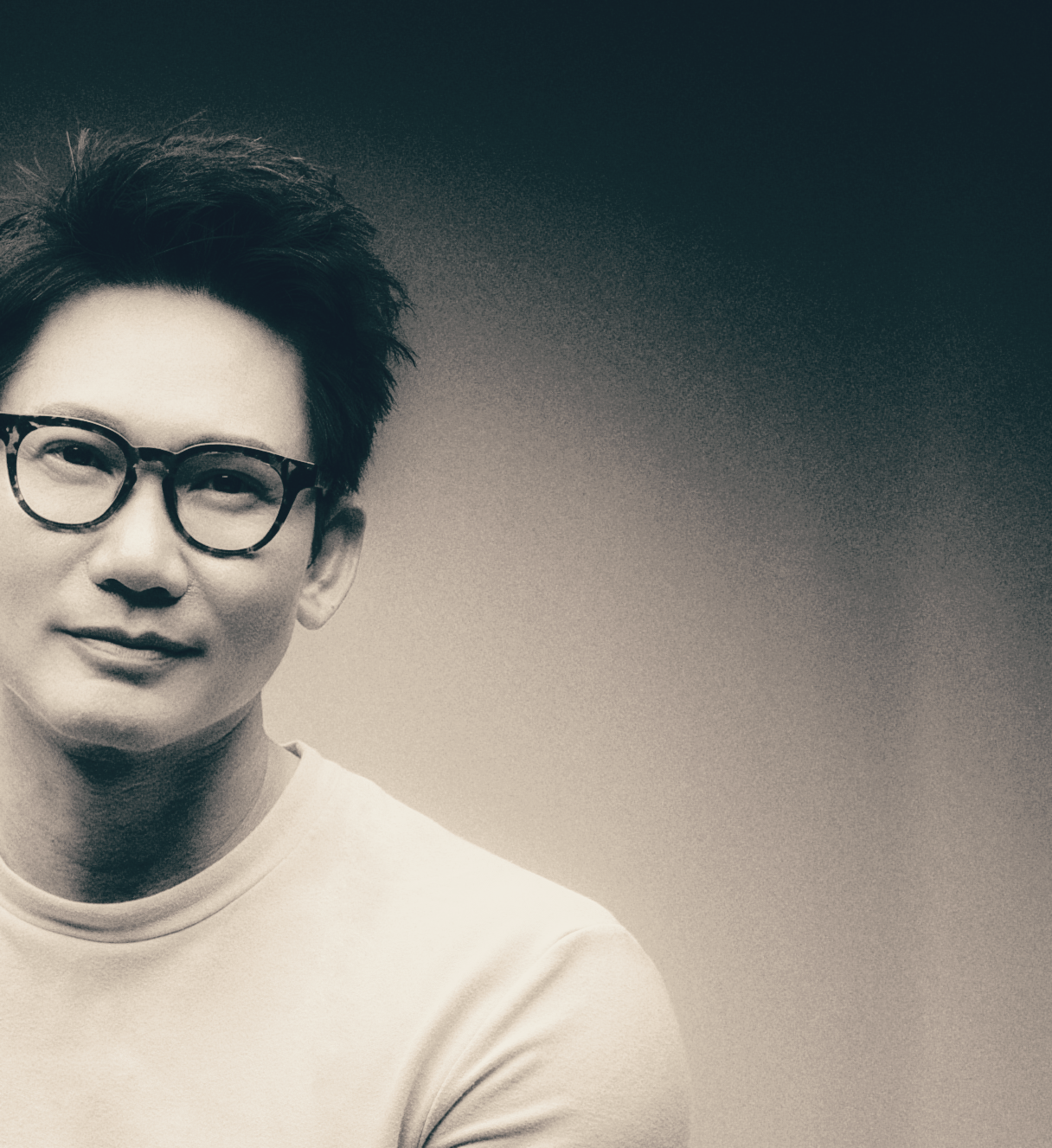
George Chan, MCOU, is a Counsellor, Grief Educator and Breathwork Coach who specialises in helping individuals navigate grief and loss through his private practice, This Is How We Heal. With a rich background in theatre and entertainment, George brings creativity and empathy to his work. When he's not in the therapy room, you might find him performing, choreographing, or working on a new production—or spending time with Luna, his Jack Russell Terrier, who doubles as his unofficial co-therapist and production critic.